Events Dear Boy, Events: PoliMonitor Scotland Launches in Edinburgh with panel discussion featuring Sir John Curtice
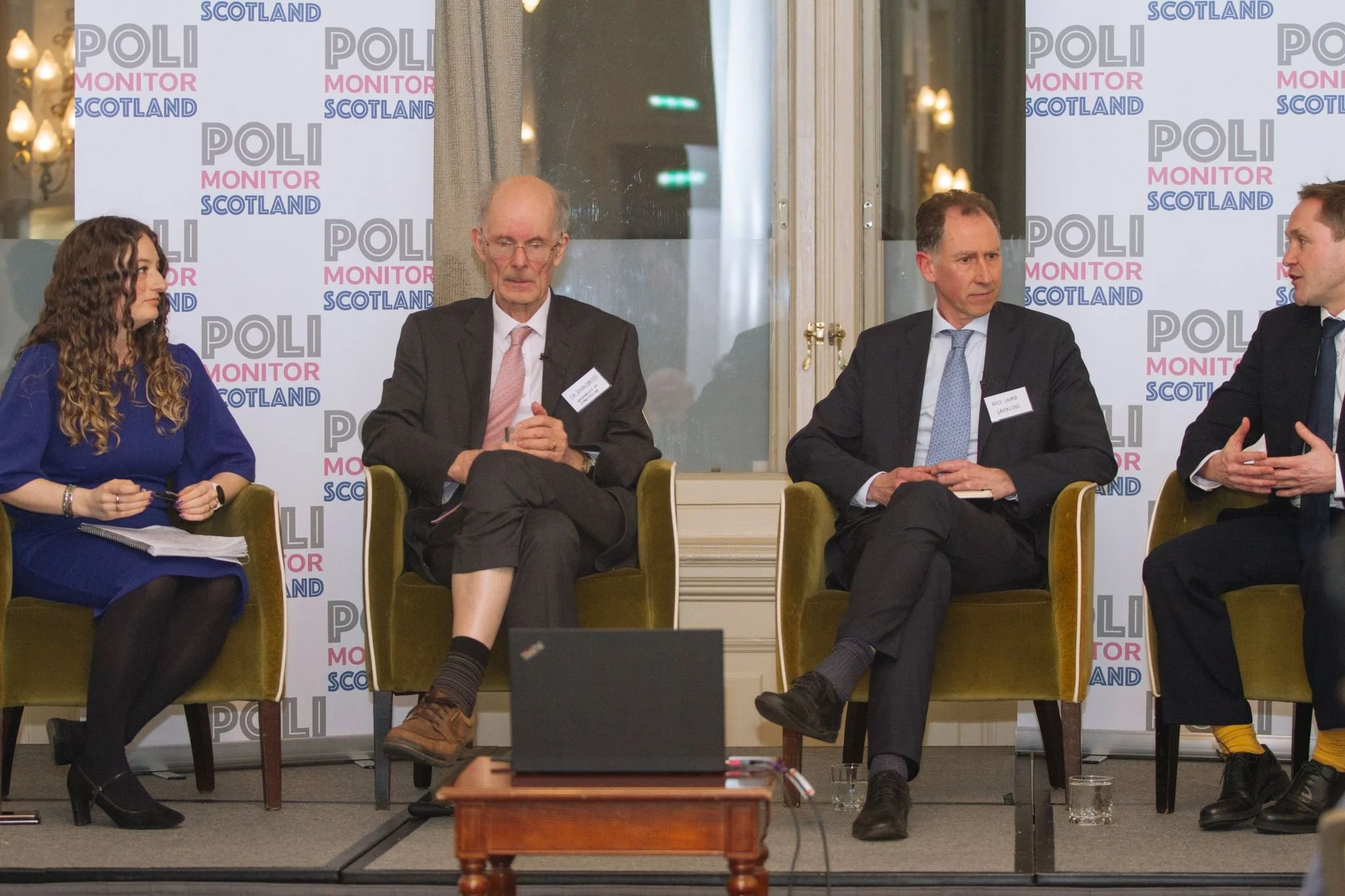
PoliMonitor’s CEO Sam Cunningham speaks at PoliMonitor Scotland’s launch event in Edinburgh
At PoliMonitor Scotland’s launch event on Wednesday in Edinburgh’s famous Balmoral Hotel, polling expert Sir John Curtice laid out in no uncertain terms the unprecedented voting picture in British politics. Speaking at The Balmoral in Edinburgh on a panel including Ross Laid from Grayling and PoliMonitor’s CEO and Founder Sam Cunningham, and chaired by Rachel Amery from The Scotsman, Curtice presented a compelling analysis of the upcoming Scottish election on May 7th.
Curtice’s fascinating presentation looked at the current state of the polls in Scotland, a timely discussion given the looming elections on 7th May. Amery noted that there has been a significant mood shift in Holyrood recently, with MSPs itching to get out of the legislative chamber and onto the campaign trail. With purdah set to commence on 26th March, there was a palpable sense that Holyrood is gearing itself up for the grinding campaign ahead.
Underlining everything was the stark reality of the national election landscape: in the words of Curtice, “all of our political parties are minorities now”. This week’s YouGov poll spelt this out clearly, with a quintet of parties receiving 14% or more of the vote.
Many commentators have suggested that the fragmentation of UK politics will likely benefit Reform UK the most, since their control over the right-leaning vote is more comprehensive. In Scotland however, the party benefiting the most from this division is Scotland’s long governing party, the SNP.
Indeed, it is this fragmentation of the unionist vote which Curtice suggested is the main reason for the SNP’s assumed victory come May 7th. He suggested that the rise in support for Labour from 2021 to 2024 was rooted in disillusionment with the SNP rather than ideological support for Anas Sarwar’s party, which left them especially vulnerable when their counterparts in Westminster started to struggle.
Naturally, the SNP holds a firm majority among supporters of Scottish independence, garnering 65% of these voters in constituency polling. Conversely, the unionist vote is sharply divided, with Reform polling 30% with anti-independence voters ahead of Labour, the Conservatives, and the Liberal Democrats, who are polling on 26%, 21% and 16% respectively.
Curtice clearly demonstrated the lack of enthusiasm for the SNP however, noting that support for the SNP among pro-independence voters is down 23% compared to 2021. Surprisingly, the biggest beneficiaries of this decline have been the Greens, who poll second with pro-independence voters on 11% of the vote. Also notable is the fact that the SNP are not losing their voters to Reform UK, which partly explains why their polling figures have remained so stubbornly fixed at around 30%, even as Nigel Farage’s party has grown in support.
“History teaches us nothing because we have never been here before.” - Sir John Curtice
Labour’s current struggles are underpinned by a lack of trust amongst the electorate: many voters who lent their support to Scottish Labour in the 2024 election now lack confidence in the ability of the party to implement policy successfully, particularly concerning the NHS and economy. On the other hand, those who voted for the SNP in 2024 overwhelmingly appear to trust their ability to effect positive change.
While among all voters, trust in both parties is net negative, the overall message is clear: Scottish voters are far more likely to blame the Labour Government in Westminster for issues with the NHS and the economy than they are to blame the SNP administration in Holyrood.
Barring a significant event, the polling picture is unlikely to shift before May 7th. Most parties’ polling numbers have been relatively stable since the autumn and, according to Curtice, these parties have all carved out their own granular niches of the electorate, meaning there is little crossover appeal outside of tactical voting. That said, he did leave the door open for change with the quote attributed to Harold MacMillan: “Events dear boy. Events”.
From here, discussion turned to what will follow after May 7th, and how the dynamics of Holyrood will take shape. The enduring strength of the Conservatives and Liberal Democrats in key areas means that an overall majority for the SNP looks unlikely, with the Greens cited as the most likely party to come to an arrangement to provide John Swinney with the votes needed to pass his agenda. However, the panel caveated all this with the point that, when push comes to shove, you can never predict what deals parties might be willing to make if it gives them a shot at government.
The arrival of Reform UK in Holyrood presents one of the most significant unknowns in Scottish politics. Under the leadership of Malcolm Offord, there is a chance that they could become the official opposition in Holyrood, and a question from the audience pondered whether having such a polar-opposite party in opposition would benefit a ruling SNP. This was certainly the opinion of Ross Laird, who suggested that the SNP could “thrive” against Reform, even if it means First Minister’s Questions will become even more frosty.
The importance of personality, both before and after the elections, was also raised. Laird highlighted that there remains an “appetite for authenticity” amongst voters, and noted the continued success of personal contact with voters on the doorstep in getting them out to vote, something Curtice noted could hurt Reform by virtue of their lack of campaign infrastructure in Scotland.
Beyond the election, PoliMonitor’s Sam Cunningham noted the potential impact the new cohort of MSPs’ personalities could have on governing, as fresh faces look to drive institutional change. Whatever happens, there can be little doubt that the election on May 7th will prove to be a pivotal realignment in Holyrood for years to come.
We would like to thanks the many people who attended our event in Edinburgh, both clients and friends alike. Keep your eyes peeled for more events from PoliMonitor Scotland soon!